
The juwai teer previous result list is the diary of the Juwai teer game. Every playing day adds one new page to that diary, and every page holds the same clean facts: the date, the first round number, and the second round number. If you have ever wondered how these daily entries are organised, why they appear in a particular order, or how to move through weeks of history without getting lost, this guide explains the entire system from the ground up.
Juwai teer is a legal archery based lottery of Meghalaya. Each working day, archers shoot at targets in two separate rounds, officials count the hits, and the last two digits of each count are declared as the winning numbers. Those declared numbers are public information, and keeping them in a proper date wise list is what turns a stream of daily announcements into a trustworthy archive. On All Teer you can reach the full archive from our homepage, where every market sits one click away.
What the Juwai Teer Previous Result List Actually Is
A result list is not a prediction sheet, a tips column, or a commentary page. It is a ledger. Each row records something that already happened: on this date, in this session, these were the declared numbers. The strength of a ledger is its discipline. It adds new rows, it never rewrites old ones, and it keeps every row in the same format so that rows can be compared.
When you open a juwai teer previous result list, you are looking at that ledger for the Juwai market. The list answers one question per row: what were the declared FR and SR numbers on this date? Because the format never changes, your eyes learn to scan it quickly. Date on the left, two numbers beside it, next row, repeat. That consistency is deliberate. It is what makes a long archive usable instead of overwhelming.
The ledger principle
Good record keeping follows three rules. Record promptly, record exactly, and never alter the past. Our archive follows all three. Numbers go up on the day they are declared, they go up exactly as announced, and once a date is complete it is never edited except to correct a proven error. This is the same discipline accountants use, applied to a lottery game, and it is why you can treat the list as a reliable reference.
How Daily Entries Are Ordered
Every juwai teer previous result entry in the list follows the same ordering rule: newest first. Today sits at the top, yesterday below it, and the days march backwards as you scroll. This ordering serves the most common use case. Most visitors want the most recent complete day, so putting it first saves everyone time.
Why newest first works
Imagine the opposite: oldest first. You would scroll through weeks of history just to reach yesterday. Nobody wants that. Newest first ordering respects your time. It also matches how memory works. You remember recent days more clearly, so seeing them first lets you confirm or correct your memory immediately, without scrolling.
How far back the list goes
The archive keeps a long rolling history, so you can travel back many weeks through past juwai teer previous result entries. Older entries are stored in exactly the same format as new ones. A record from two months ago shows its date, its FR and its SR, just like yesterday’s record. History does not degrade in a well kept list.

Anatomy of a Single Result Entry
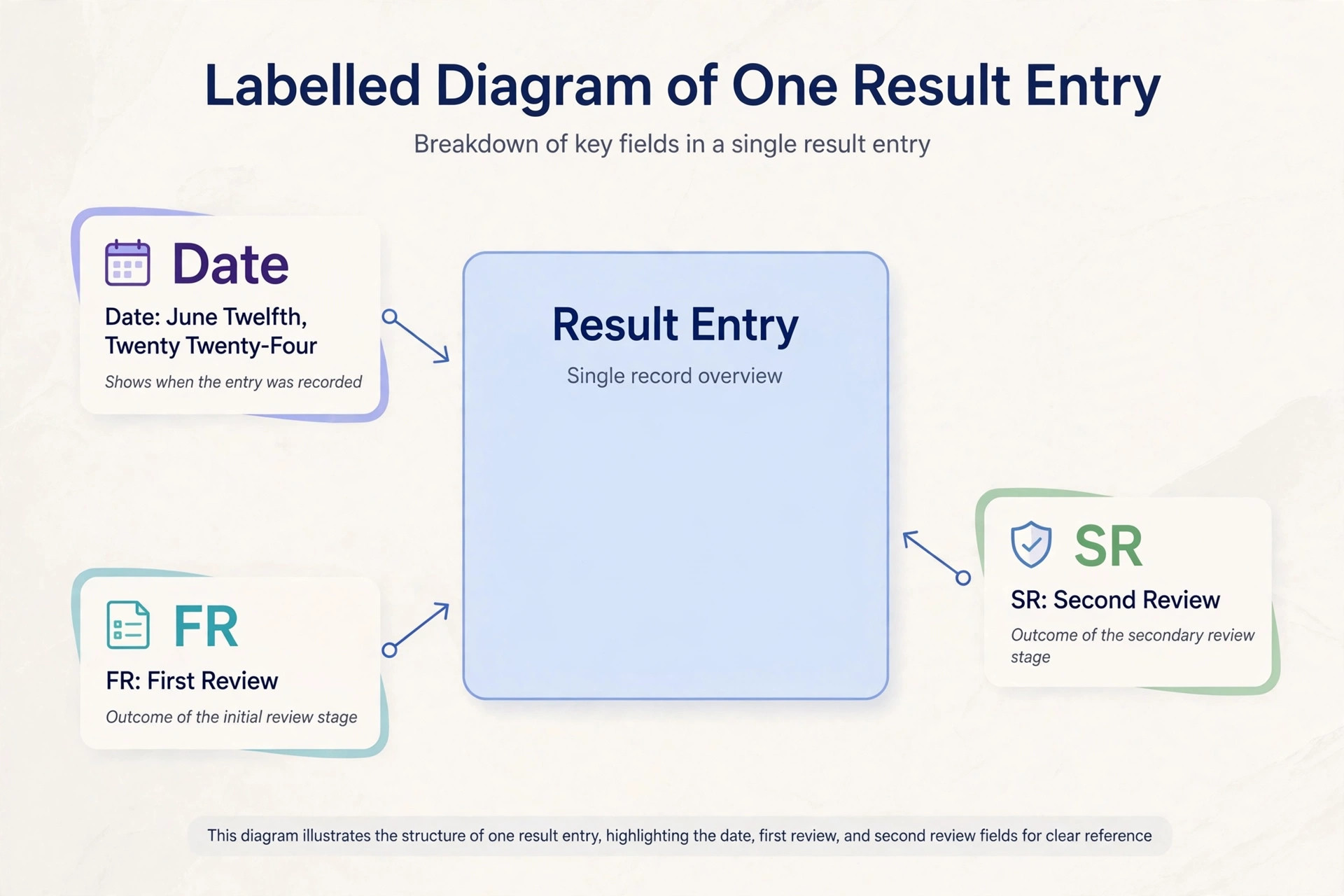
Let us take one entry apart and name its pieces. Understanding the anatomy once means you will read every future entry correctly without thinking.
The date stamp
The date stamp is the identity of the entry. It tells you which game day the numbers belong to. Read all three parts: day, month, year. A juwai teer previous result without a confirmed date is just two numbers floating in space. Make the date the first thing your eyes check, every single time.
The market label
The market label says which game the numbers belong to. On a multi market page, Juwai entries sit in the Juwai block, Shillong entries in the Shillong block, and so on. The label is your guarantee that you are reading the right game. Juwai day, Juwai morning, Shillong, Khanapara: each is a separate game with separate numbers, and the label keeps them apart.
The FR value
The first number in the pair is the first round result: the last two digits of the hit count from the day’s opening archery session. It is always shown first, in every entry, on every date. Consistency of position matters because it lets you compare FR values across dates at a glance.
The SR value
The second number is the second round result, from the later archery session. It is independent of the FR value. Same day, same game, but a fresh round of shooting with a fresh count. When you read a juwai teer previous result, you are reading two independent outcomes that happen to share a date.
The dash placeholder
Where a number has not been declared yet, a dash “-” holds its place. On past dates both dashes are filled. On the current live day you may see one real number and one dash, which simply means the second round is still to come. The dash is never a result and never a zero.
The Daily Rhythm Behind Every Record
Every entry in the archive was once a live day, and live days follow a rhythm. The Juwai day session declares its first round in the early afternoon and its second round shortly after. The Juwai morning session, a separate game, declares its rounds late in the morning. Declarations follow the actual counting at the ground, so the exact minute can shift slightly, but the order never changes: FR first, SR second, morning before afternoon.
Knowing this rhythm helps you interpret the list. An entry with both numbers filled is a settled day. An entry with one dash is a day in progress. An entry missing entirely, with no row for that date, is a day with no game, which happens on Sundays and holidays. The list is honest about all three states, and reading it with the rhythm in mind removes all mystery.
For the live numbers of the current day session, visit our juwai teer result page, which updates as declarations happen.
Searching the Archive by Date
When you need a specific juwai teer previous result, searching by date is faster than scrolling. Here is a practical method.
Fix the exact date in mind first
Before you touch the archive, decide the exact date you want: day, month, year. Vague intentions like “last week sometime” lead to reading the wrong row. Precision at the start saves correction later.
Scan dates, not numbers
As you move through the list, let your eyes follow the date column only. Numbers are distracting when you are hunting a date. Once the date matches, stop and read the numbers beside it. This two phase scanning, dates first then numbers, is the fastest reliable way through a long archive.
Double check before noting down
When you find your date, read it once more along with the market label, then copy the FR and SR values in order with the date attached. A complete note looks like a date followed by two numbers. Anything less is an incomplete record that may confuse you later.

Morning and Day: Two Diaries, Not One
It is worth stressing again because it causes so many errors: Juwai morning teer and Juwai day teer are two separate games, and their previous results form two separate diaries. The morning game shoots in the morning with its own archers. The day game shoots in the afternoon with its own archers. Their numbers never mix, and their records must never mix.
When the archive shows a juwai teer previous result for a date, check which session the entry describes. Our pages label morning and day entries separately so the boundary stays visible. If you keep personal notes, keep two columns or two pages, one for morning and one for day. Future you will be grateful.
Why the List Never Contains Predictions
A ledger records the past. Predictions guess the future. Mixing them corrupts both. That is why our previous result list contains only declared numbers and nothing else. You will not find common numbers, hit numbers, target numbers, or house and ending suggestions anywhere near the archive, because those are guesses and a ledger has no room for guesses.
This discipline also protects you. Pages that blend old results with “tomorrow’s expected numbers” train readers to treat guesses as data. Over time that habit costs money, because guesses dressed as records encourage spending based on false confidence. A clean juwai teer previous result list teaches the opposite habit: respect what is declared, ignore what is merely hoped for.
Teer is a legal lottery in Meghalaya for adults aged 18 and above only. Please participate responsibly and never spend more than you can comfortably afford to lose.
Common List Reading Errors and How to Avoid Them
Reading the live day as history. The top entry may still be in progress with a dash for the undeclared round. Treat it as live, not as a settled record.
Ignoring the market label. In a hurry, readers grab numbers from the wrong market block. Always confirm the Juwai label first.
Copying numbers without the date. A pair of numbers without a date is useless as a record and dangerous as a reference. Always attach the date.
Assuming a missing date is an error. Sundays and holidays have no game and therefore no entry. A gap on those days is correct behaviour, not missing data.
Trusting forwarded screenshots over the list. Screenshots lack dates, labels, and context. The dated list is the authority. When they disagree, the list wins.

How We Build and Protect the Archive
Each working day, our team collects the declared Juwai numbers from at least two independent sources. A number is published only when the sources agree. If they disagree, the entry waits until the correct figure is confirmed. We never invent a number to fill an empty slot, because one invented number would destroy trust in every real number around it.
When the day’s results are final, the entry joins the dated list in newest first order, and the archive grows by one row. Session labels, date stamps, and FR before SR ordering are preserved exactly. This routine has run every working day without exception, which is why the juwai teer previous result list stays complete on its own.
To learn more about who maintains these records, visit our about us page. For background on the game, the archery overview on Wikipedia is a solid starting point, and the Shillong article on Wikipedia describes the capital city of Meghalaya where the game is played.
The Value of a Complete Archive for the Teer Community
A complete juwai teer previous result archive does quiet work for the whole teer community. For newcomers, it is a textbook. Reading through past entries teaches the structure of the game faster than any explanation: two rounds a day, morning and day sessions kept apart, dates attached to every number. A beginner who spends twenty minutes browsing the archive understands teer better than one who only watches live numbers flash by.
For regular followers, the archive is a memory aid. Nobody remembers every number from every day, and nobody should have to. The list remembers for you, accurately and without effort on your part. For counter owners and small shopkeepers who deal with customers asking about past numbers, the archive is a referee that settles questions instantly and fairly.
There is also a wider value that is easy to overlook. A public, dated, unchangeable record keeps the game honest. When every declared number stays visible forever, there is no room for anyone to misreport a result after the fact. Transparency like this builds trust in the game itself, and trust is what keeps a traditional game alive in the modern age. Every row in the juwai teer previous result list is a small contribution to that trust.
FAQs About Juwai Teer Previous Result
How is the juwai teer previous result list organised?
The list is organised date wise with the newest entries at the top and older entries below. Each row shows the full date, the market label, and the FR and SR numbers for that day, so you can scan backwards through history in order.
Why is the newest result at the top of the list?
Because most visitors want the most recent complete day. Newest first ordering puts the commonly needed entries first and saves scrolling through weeks of history to reach yesterday.
What does it mean when a past date has no entry at all?
It means no game was held that day. Teer is generally not played on Sundays and pauses on some public holidays. A missing date in the juwai teer previous result list is normal and expected on those days.
How do I know whether I am reading the morning or day session record?
Check the session label on the entry. Morning and day sessions are labelled separately because they are separate games with separate numbers. Never assume. Read the label every time.
Can old entries in the list change after they are published?
Practically no. Once a date is complete with both rounds declared, the entry is final. The only exception would be the correction of a proven publishing error, which is rare and would be done transparently.
Why do some entries show a dash on the current day?
The dash “-” is a placeholder for a round that has not been declared yet. On the live day you will see dashes turn into numbers as each round is announced. On past dates both numbers are already filled in.
Is it safe to rely on the previous result list for confirming numbers?
Yes. The list is a dated public record built from declared numbers verified against multiple sources. For confirming a number you heard elsewhere, the juwai teer previous result list is the most reliable reference available.
Conclusion
The juwai teer previous result list is a simple, disciplined ledger: one row per playing day, each row carrying a date and two declared numbers, ordered newest first. Learn its anatomy, respect the date stamp, keep morning and day sessions apart, and use it as the authority whenever a forwarded number needs checking. Kept and read this way, the archive does exactly what a public record should do: it tells the truth about every Juwai teer day, plainly and permanently.
Teer is a legal lottery in Meghalaya for adults aged 18 and above. Please play responsibly.